TENGAone: cardboard illusion, carved wood and street-born characters
The Tokyo artist makes durable objects look temporary, using graffiti, sculpture and manga-inflected figures to examine conflict and social pressure.
Artist at a glance
- Base
- Tokyo, Japan
- Birth
- 1977
- Graffiti start
- Age fourteen
- Material method
- Carved wood finished to resemble cardboard
TENGAone is a Tokyo-based artist born in 1977 whose practice moves between graffiti, murals, sculpture and graphic design. GR Gallery says he began graffiti at fourteen. That street background remains visible in direct characters and improvised surfaces, but studio objects often depend on a reversal: wood is carved and painted until it appears to be discarded cardboard.
Durable objects disguised as waste
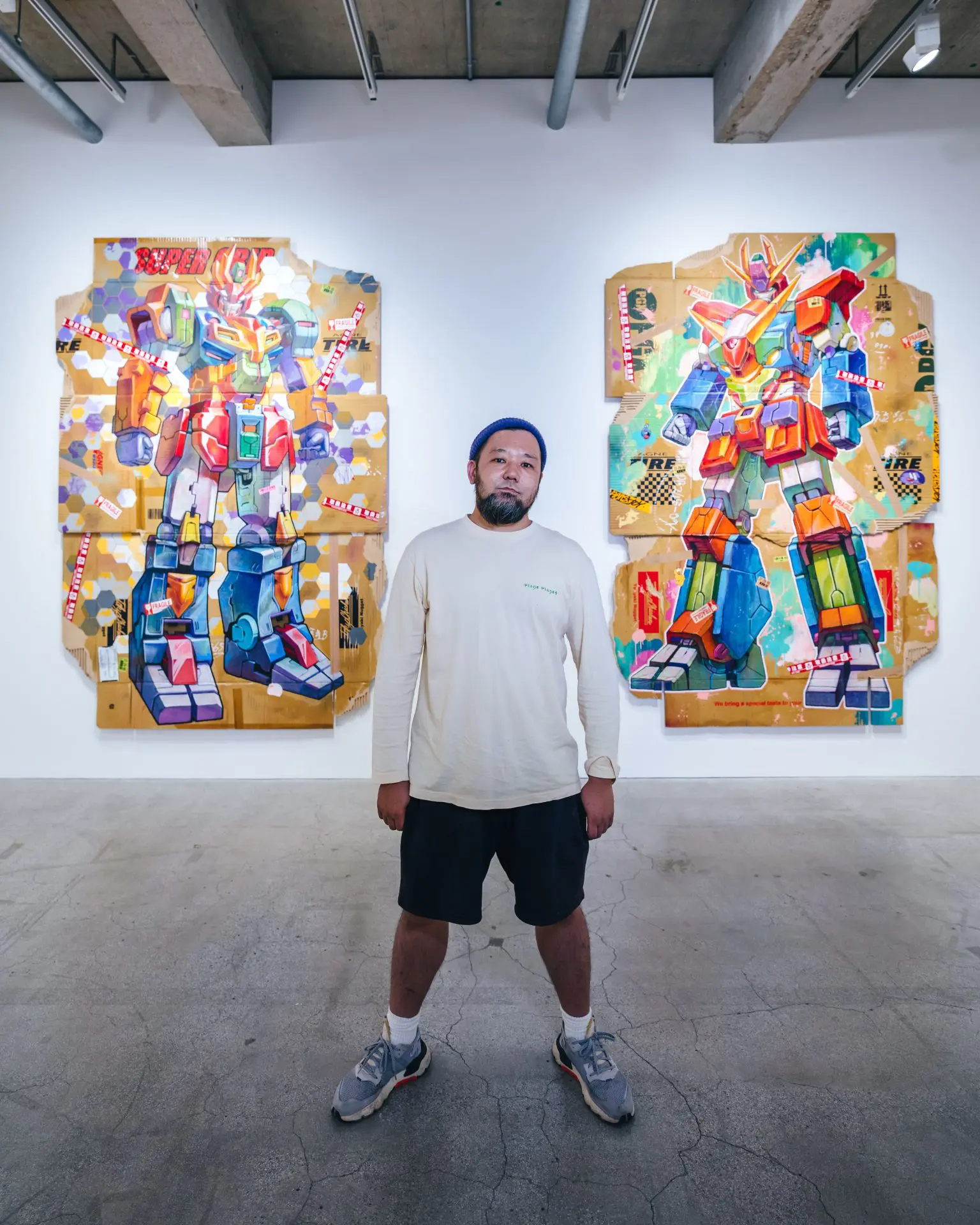
Cardboard suggests shipping, temporary shelter, storage and disposal. TENGAone reproduces its folds, torn edges, tape marks and printed labels in durable material. The illusion changes the viewer’s first judgment. What appears cheap or temporary can require slow carving and controlled surface work.
That contradiction gives the characters a specific environment. Monsters and humanoid figures seem assembled from whatever was available, as though they survived rather than arrived pristine. GR Gallery connects those figures to war, politics and social issues. The work can look playful without becoming consequence-free.
The official portrait shows TENGAone between two character works in a gallery. Corrugated surfaces and box-like bodies contrast with the clean exhibition space. The objects borrow the language of packing waste while functioning as deliberately constructed sculpture.
Graffiti, manga and surface pressure
Graffiti trained TENGAone to work through public visibility, compressed symbols and marked materials. Later works preserve that pressure indoors. Scratches, simulated tape and printed fragments suggest an object existed before the exhibition and has already been handled.
In Disorderly Conduct, GR Gallery describes new manga-influenced characters. Manga supplies expressive figure language; cardboard keeps the body connected to labour, circulation and survival. Neither is merely decorative.
Collector reference
Do not record “cardboard sculpture” unless material is actually cardboard. Title, medium, support, dimensions and construction are essential because appearance intentionally misstates substance. Official documentation for You Had to Be There, for example, identifies acrylic on MDF.
Compare fronts, edges, backs and attachments with gallery images. Preserve invoices, labels and exhibition checklists. Surface wear may be intentionally painted or carved; do not confuse it with later damage without close inspection.
The work is strongest when illusion and subject reinforce one another. A persistent character built from a simulated discarded surface makes precarity visible while refusing to disappear. Humour may be immediate, but construction asks for a slower second look.
Sources
- GR Gallery — TENGAone
- GR Gallery — Disorderly Conduct
- Image: GR Gallery / TENGAone.
Upcoming dates & buying windows
Current releases
No confirmed upcoming dates listed.
Explore the covered releases below or visit the official website.
0 archived releases
Release history & catalog
Release history is growing.
New coverage will appear here as individual releases are added.
Sources & verification
- TENGAone — validated artist profile image ↗official · checked Nov 25, 2026