It’s Lonely at the Top: a scaffold turns height into exposure
Cleon Peterson’s red and gold-coloured treatments of It’s Lonely at the Top preserve the same scaffold scene while changing the atmosphere around it.

In Cleon Peterson’s It’s Lonely at the Top, elevation brings exposure. A figure stands within a guillotine’s frame above a dense crowd, while a hooded figure holds the rope beside it. The title’s familiar association between height and success becomes uncomfortable once “the top” is a scaffold. Peterson’s September 1, 2026 announcement presents red-ground and gold-coloured-ground versions of the same hand-pulled screenprint. Both keep the execution apparatus, clouds and human silhouettes black. Artist’s announcement.
The tallest presence is a machine
The guillotine extends much farther into the sky than any of the three figures on the platform. Its two uprights isolate the central person in a narrow opening, and the blade’s slant introduces the threat of movement into an otherwise static scene. The rope continues that diagonal toward the hooded figure’s hand. Together, those lines connect the possibility of action above with a person able to initiate it below.
The central figure has no readable facial expression. Nor does the crowd offer a set of individual reactions: its heads and raised arms merge into a dark mass along the bottom of the sheet. Isolation is consequently a matter of placement. One body is separated by the machine’s frame and displayed above many others. The print does not need a portrait likeness to make that difference in position consequential, and the announcement does not identify a named person represented by the scene.
Peterson leaves a large interval of sky between the platform and the upper boundary. Two small birds cross it, while broad black cloud forms press inward from the sides. The artist’s brief accompanying “Flap… flap… flap…” draws attention to this quieter activity around the suspended threat. The birds have room to move in a way the central figure does not. Their small scale makes that freedom easy to overlook until the title and caption direct attention back toward the open space.
One scene, two atmospheric registers
The red-ground version brings the sky forward. Its large uninterrupted areas seem active even where nothing is depicted, surrounding the scaffold with an insistent colour. Against the gold-coloured ground, the same black shapes appear more like a stark emblem or a scene fixed in a commemorative image. That reading concerns the colour in the official photographs; neither photograph establishes an ink formula or reflective finish.
Because the scaffold, crowd and clouds remain black in both versions, the change does not redistribute colour among the characters. It alters the atmosphere enclosing them. That distinction is useful when comparing impressions: neither treatment singles out the person at the guillotine with a special colour. A collector choosing between the two is choosing how the space around the event behaves, while the image’s hierarchy remains intact.
The black outer field is important to that hierarchy. Clouds connect visually to the surrounding darkness, and the crowd thickens into it below, leaving the coloured sky as an irregular opening around the execution platform. Cropping to the central apparatus would remove this enclosing pressure. The complete sheet reveals an image framed twice: once by the dark perimeter and again by the guillotine around its subject.
Peterson’s earlier Last Stop America, Land of the Free also organises a threat vertically, but its uniformed figure fills nearly the entire height above a small compound. Here, people occupy far less of the sheet and the apparatus takes command. The comparison shifts attention from the imposing body of authority to a structure that can make a person conspicuously vulnerable. Last Stop America announcement.
September’s announcement and the two pictured treatments
The artist describes a signed and numbered, 15 × 20-inch hand-pulled screenprint on 290 gsm Coventry Rag with deckled edges. The caption lists editions of 40 and 20 without explicitly assigning them to the red and gold-coloured treatments. The labels used here describe the images rather than asserting official store names.
September 1 dates the “available now” announcement. It establishes an offer by that day, without supplying an exact original opening, price, work year or present availability. The caption’s two edition sizes should therefore remain separate from any assumption that a particular colour is the smaller run.
In the details
- medium
- Hand-pulled screenprint
- dimensions
- 15 × 20 inches
- paper support
- 290 gsm Coventry Rag; deckled edges (artist announcement)
- edition type
- Numbered edition; per-colour denominator unstated
- signed numbered
- Signed and numbered (family announcement)
- artwork series
- It’s Lonely at the Top
Explore the variants
It’s Lonely at the Top (Black scene on red)
A guillotine and three figures on a scaffold above a crowd, with birds and clouds overhead; black scene on red. Hand-pulled screenprint. Colour label is descriptive, not an official SKU; edition denominator remains unknown.
- Medium
- Hand-pulled screenprint
- Dimensions
- 15 × 20 inches
- Paper Support
- 290 gsm Coventry Rag; deckled edges (artist announcement)
- Edition Type
- Numbered edition; per-colour denominator unstated
- Signed Numbered
- Signed and numbered (family announcement)
- Artwork Series
- It’s Lonely at the Top
It’s Lonely at the Top (Black scene on gold-coloured ground)

A guillotine and three figures on a scaffold above a crowd, with birds and clouds overhead; black scene on gold-coloured ground. Hand-pulled screenprint. Colour label is descriptive, not an official SKU; edition denominator remains unknown.
- Medium
- Hand-pulled screenprint
- Dimensions
- 15 × 20 inches
- Paper Support
- 290 gsm Coventry Rag; deckled edges (artist announcement)
- Edition Type
- Numbered edition; per-colour denominator unstated
- Signed Numbered
- Signed and numbered (family announcement)
- Artwork Series
- It’s Lonely at the Top
Sources & verification
- Cleon Peterson — It’s Lonely at the Top official artist post ↗official · checked Oct 10, 2026
- cleonpeterson.com ↗official · checked Oct 6, 2026
- www.thejaunt.net ↗official · checked Oct 6, 2026
- www.albertzbenda.com ↗official · checked Oct 6, 2026
- www.under-dogs.net ↗official · checked Oct 6, 2026
Cleon Peterson
Related reading

2026 Panini Black Friday Bonus Packs
A limited November 23–29 promotion adding exclusive multi-sport Black Friday packs to purchases of eight named Panini products.
Read the story ↗
Toy Brick Left Hand (Red)
Ai Weiwei's hand-built red WOMA brick sculpture, edition of 750, offered through an Avant Arte draw closing November 30, 2026 at 14:00 UTC.
Read the story ↗
2026 Topps MLS Black and White Soccer
A monochrome MLS trading-card release scheduled to open for preorder November 30.
Read the story ↗
In Position
Avant Arte offers Johnson Tsang’s elongated resin sculpture in an edition of 300 through a purchase draw closing December 1.
Read the story ↗
Topps True Football Bundesliga 2025/26
The debut Topps True Football collection brings premium Bundesliga autograph and relic cards to an EQL-managed December 1 preorder.
Read the story ↗
2026 Topps Star Wars Masterwork
The premium Star Wars trading-card line returns with a December 1 preorder date; final release and configuration details remain open.
Read the story ↗
Topps Merlin UEFA Club Competitions 2025/26
A 200-card UEFA Chrome release combining Merlin nostalgia with refractors, inserts, autographs and match-ball relic content.
Read the story ↗
2026 Topps Royalty WWE
A premium WWE trading-card release announced for December 4 with rare autographs, relics and iconic Superstars; configuration details remain pending.
Read the story ↗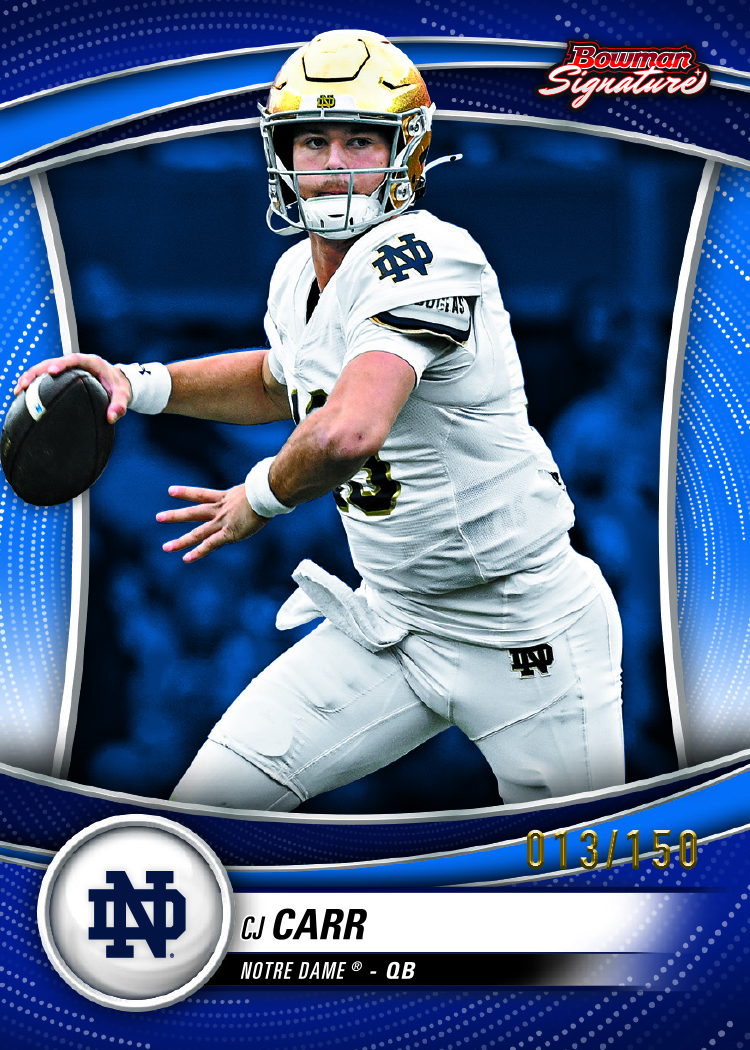
2026 Bowman U Signature Football
A 30-card Hobby configuration with six autographs per box, combining college-football legends and current stars for a December 4 release.
Read the story ↗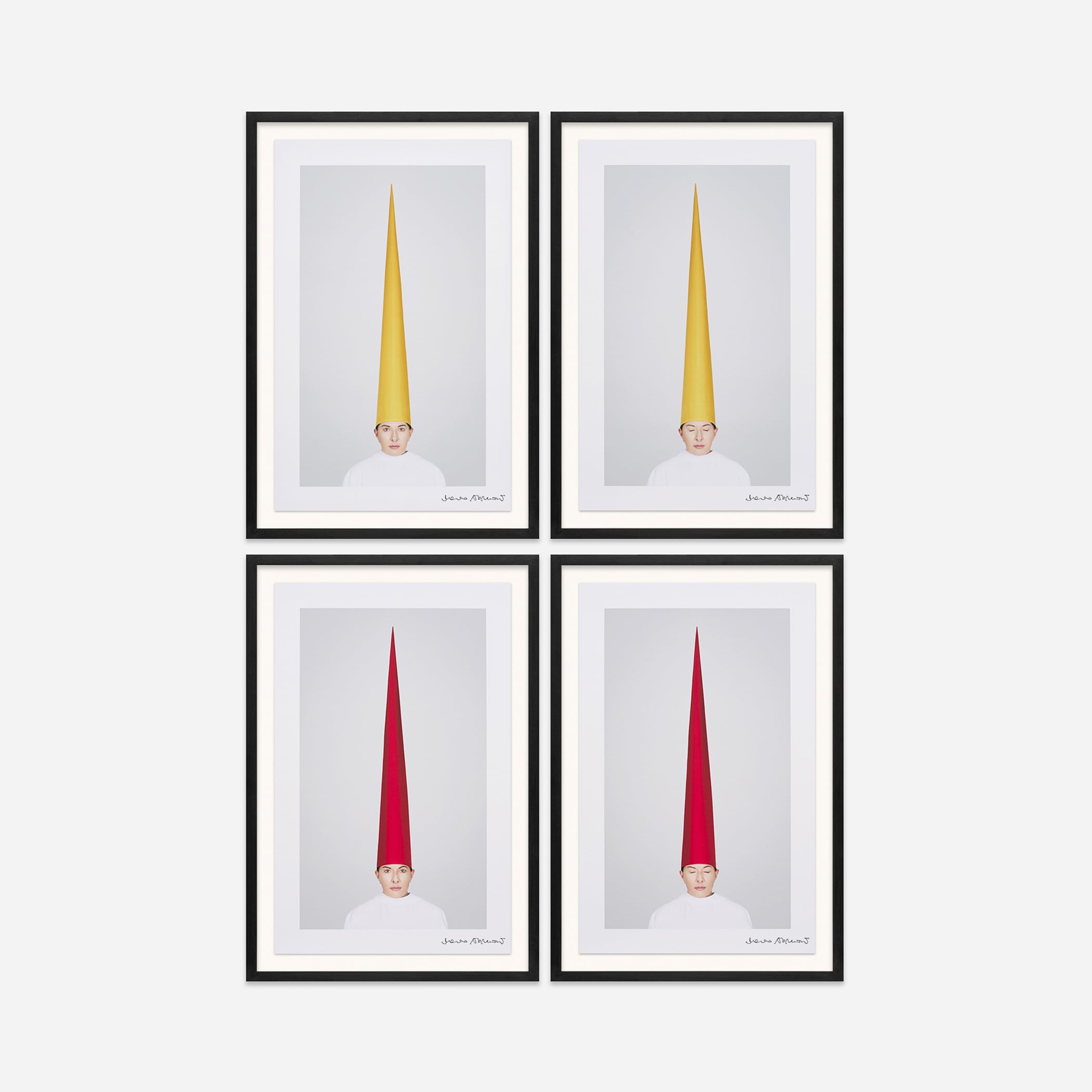
Energy Hat
Marina Abramović’s four-print Energy Hat family pairs red or yellow conical hats with eyes-open or eyes-closed portraits in individually signed, time-limited archival pigment editions.
Read the story ↗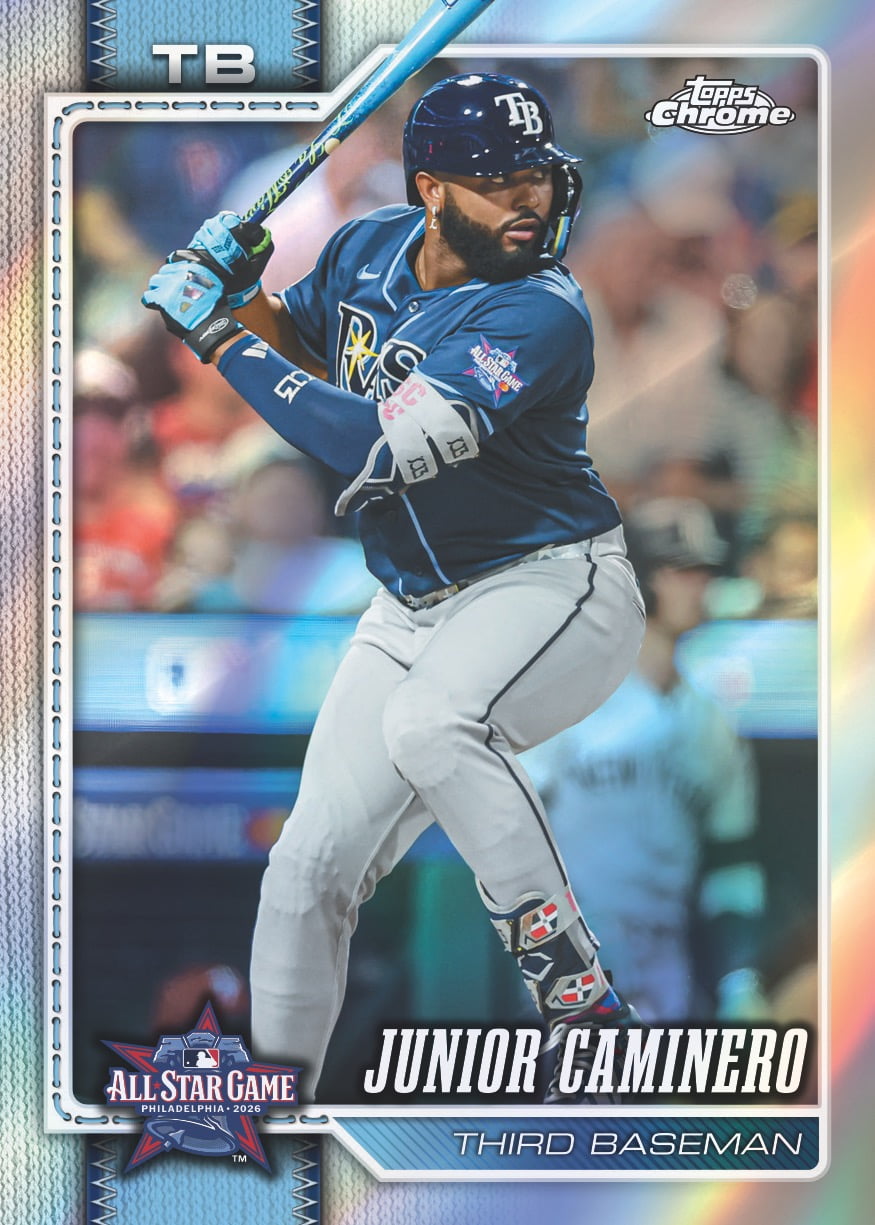
2026 Topps Chrome Update Series Baseball
Chrome’s late-season baseball update returns December 9 with one-of-one Rookie Debut Patch Autographs and distinct Hobby and Mega formats.
Read the story ↗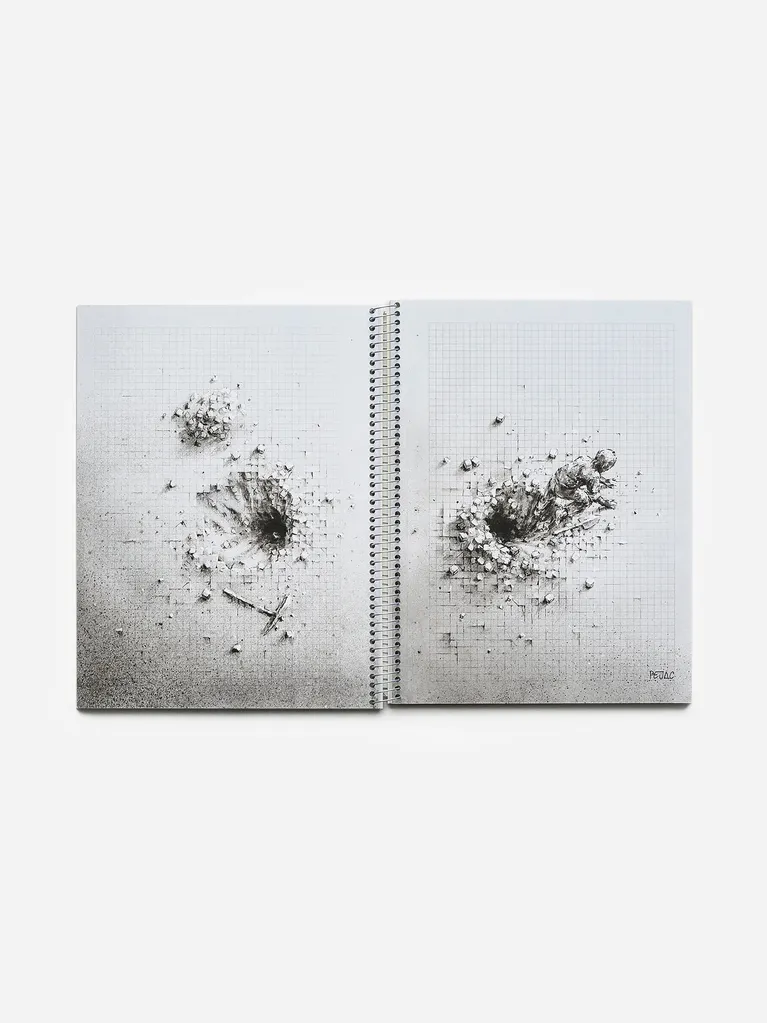
BARBED WIRE (Silkscreen Edition)
Pejac’s open-notebook drawing becomes a 24-layer silkscreen edition of 75 with metallic details.
Read the story ↗