Exhibition
The Best Of Hancock Gallery: Invader in a September online selection
Invader joined Lowry, Banksy and Norman Rockwell in Hancock’s September 9–16, 2026 Artsy group presentation.
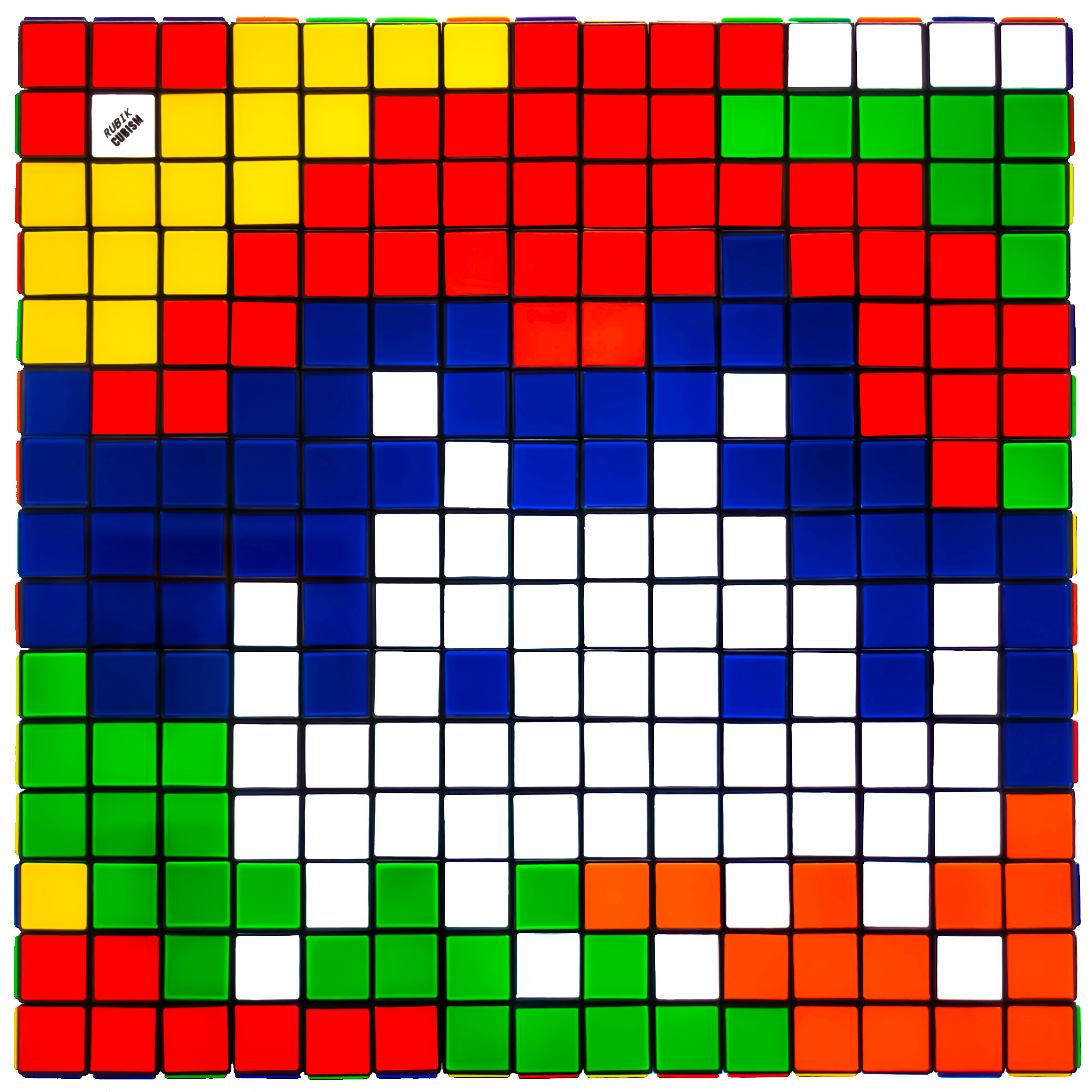
Artwork: Invader. Image: Hancock Gallery, via Artsy. Photographer not identified. · Image source
The Best Of Hancock Gallery was an online Artsy presentation from September 9 to September 16, 2026. Its announcement highlighted Invader, L. S. Lowry, Banksy and Norman Rockwell. The most revealing connection among these names is the range of print identities gathered under one gallery selection. Subject, printing process, proof status and colourway each describe a different aspect of an object. Hancock’s selection makes those distinctions unusually visible because similar labels recur across otherwise contrasting artists.
What an artist’s proof identifies
Rockwell supplies the clearest comparison. Hancock lists Saturday People as a collotype artist’s proof and Moving Day as another collotype with an artist’s-proof designation. Barbershop Quartet, also titled as an artist’s proof, is instead described as a lithograph on paper. The shared proof language therefore does not make the three works the same kind of print. It identifies their edition status while leaving the production process to a separate description.
Lowry’s St. Luke’s Church, Old Street, London adds another combination: a signed lithograph, with the listed impression numbered 214/850. “Signed,” “lithograph” and the fraction answer three different questions about that object. A collector comparing it with Rockwell’s proofs would lose useful information by treating the signature, proof designation or edition number as a substitute for the medium. The interest of this grouping is precisely that an apparently familiar category, the artist’s print, breaks into more specific identities.
The dates require similar care. Hancock gives Saturday People a 1966–1978 range and the Lowry entry a 1934–1976 range. Those spans should remain visible rather than being reduced to a single, unsupported production year. Their presence also keeps the September 2026 exhibition in perspective: the gallery was bringing earlier objects into a new selection, not announcing a common new edition.
One motif, distinct versions
Banksy’s two Gangsta Rat entries turn attention from proof status to version. The green screenprint is listed as 2005 and numbered 20/20; the pink screenprint is dated 2004 and numbered 18/46. Both measure 50 by 30 centimetres. The shared motif and dimensions create a direct comparison, but the colourway, date and edition denominator prevent the labels from collapsing into one interchangeable object.
This is a useful corrective to recognising an artwork by image alone. A collector can recognise Gangsta Rat immediately and still need the version-specific details to understand the particular print.
Invader extends this vocabulary of processes. The associated selection includes the 2011 woodcut Invaded Scream and the 2023 mounted Giclée Rubik Camouflage. Their inclusion places his editions within the same questions raised by Rockwell, Lowry and Banksy: what was printed, by which process, in which version, and how is this object identified within it?
Artists
Venues & public dates
Hancock Gallery / Artsy online exhibition
Sep 9, 2026 – Sep 16, 2026
Official exhibition details ↗Sources & verification
- The Best Of Hancock Gallery ↗official · checked Oct 8, 2026
- www.space-invaders.com ↗official · checked Oct 6, 2026
- www.space-invaders.com ↗official · checked Oct 6, 2026
- heni.com ↗official · checked Oct 6, 2026
- shop.space-invaders.com ↗official · checked Oct 6, 2026
- heni.com ↗official · checked Oct 6, 2026
- Invader official website ↗official · checked Oct 8, 2026