Invader: mosaics, Rubikcubism and the city as canvas
The anonymous artist translates pixels into physical objects, connecting an international mosaic project with Rubik’s Cube constructions, printmaking and public participation.
 RELEASE RADAR HQ
Artist at a glance
- Primary print publisher
- HENI, 2023–2026 inspected releases
- Artist store
- Space Shop
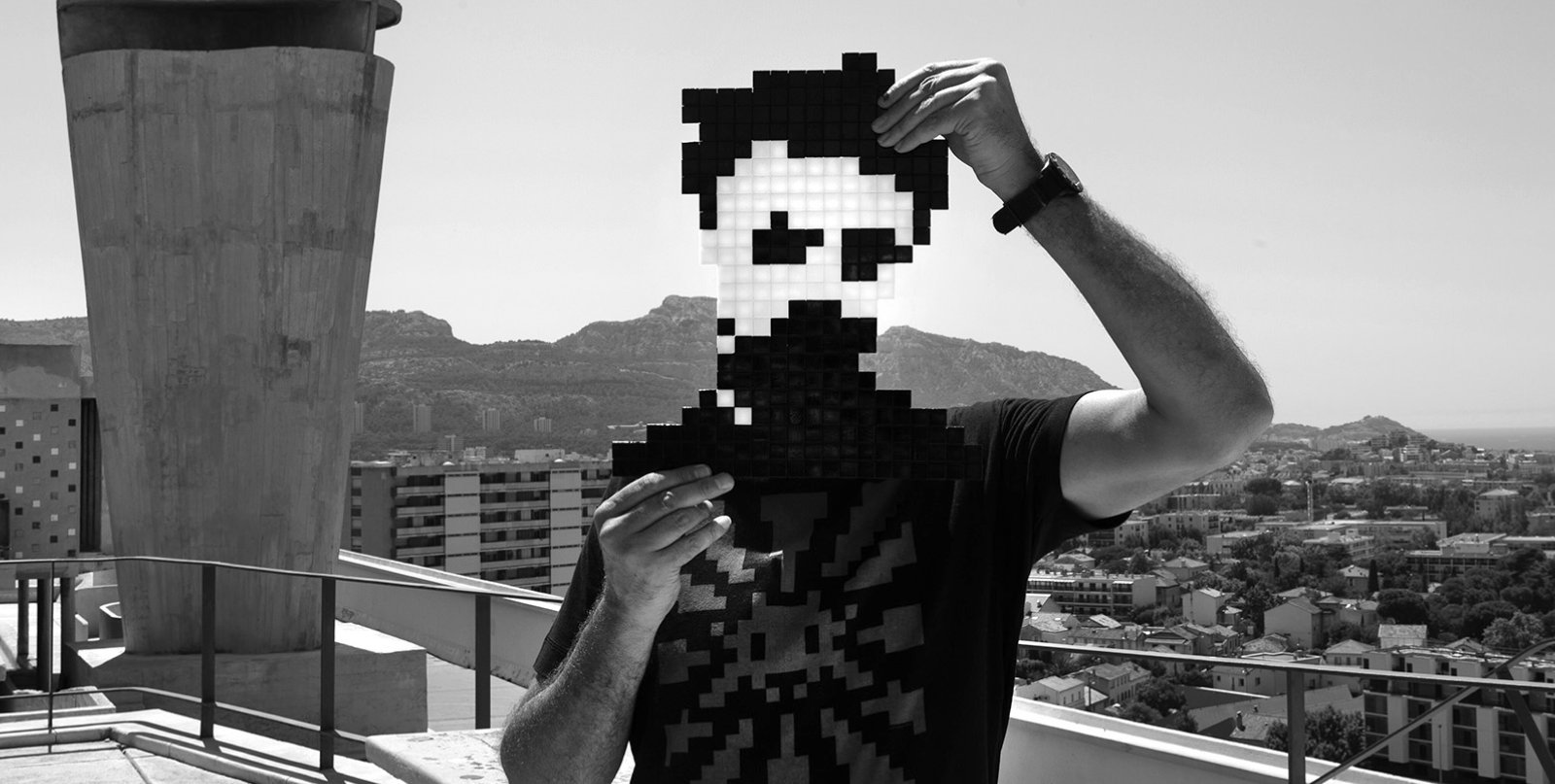
Invader is a single artist working under a pseudonym, best known for translating pixel imagery into ceramic mosaics installed in public places. He began the Space Invaders project in 1998, initially in Paris and subsequently in other cities. Anonymity forms part of the practice: the artist’s official introduction presents the work as an expanding installation whose separate pieces connect across the urban landscape.
A visual language built from pixels
Invader expanded from video-game characters into invented creatures and other cultural figures. His account describes scouting locations and recording each installation, connecting an image to a particular place.
His official biography and exhibition history also document training at the Beaux-Arts de Paris and the Sorbonne. Institutional presentations include Prints on Paper at MGLC in Ljubljana in 2021, Invader Rubikcubist at MIMA in Brussels in 2022 and Invader Space Station in Paris in 2024. Together, these exhibitions show a practice that has developed in galleries and museums alongside the street project.
Rubikcubism and recognition
Rubikcubism began in 2005, substituting assembled Rubik’s Cubes for tiles. The cubes impose a six-color palette and a coarse grid; an image that appears fragmented close up becomes easier to recognize at a distance or through a screen. That change in perception is central to the technique.
The Rubik Masterpieces works revisit art-historical images, while Rubik Bad Men depicts real and fictional figures. Rubik Low Fidelity draws on record sleeves, extending an idea developed for the 2009 Top 10 exhibition in New York. These bodies of work use the same material constraint for different kinds of cultural memory: paintings, personalities and music can all become an exercise in recognition through reduction.
Participation and collecting context
The FlashInvaders application turns encounters with the street mosaics into a participatory game: users photograph works, build a digital gallery and accumulate points. The act of looking and moving through a city therefore becomes part of how audiences experience the project.
The artist’s format guide distinguishes studio-produced invasion kits from an Alias: a unique counterpart to one street mosaic, accompanied by its identifying record. That distinction helps connect an acquired object to the wider public project. For the cube constructions, the relationship is different: material, viewing distance and recognition are themselves part of the experience, extending the pixel-to-object investigation beyond the street.
Upcoming dates & buying windows
Current releases
No confirmed upcoming dates listed.
Explore the covered releases below or visit the official website.
3 archived releases
Release history & catalog
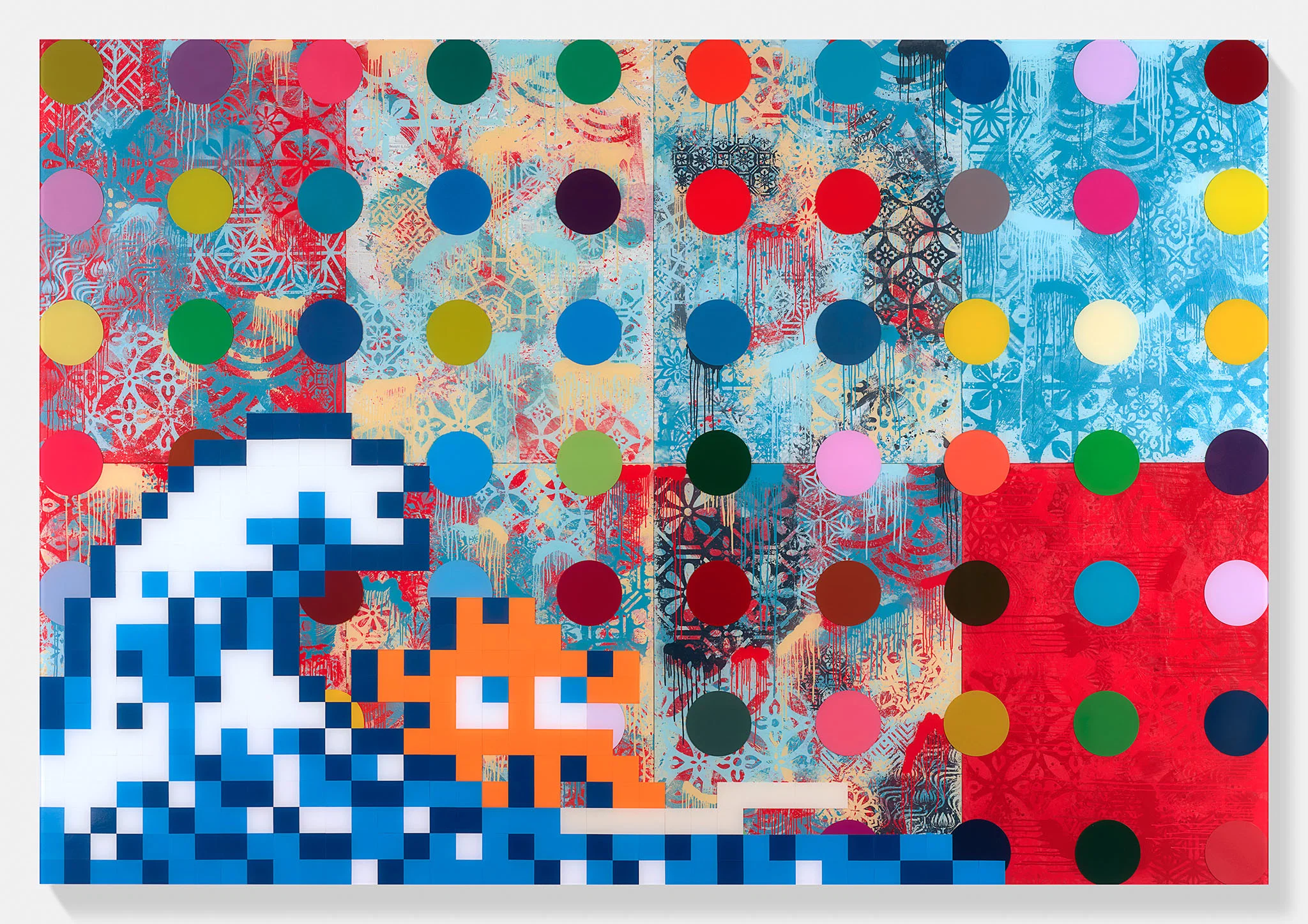
Troubled Waters
The three-artist TT6 panel has a fixed edition of 200 plus 30 APs; its September 2026 application window is closed.
Read the story ↗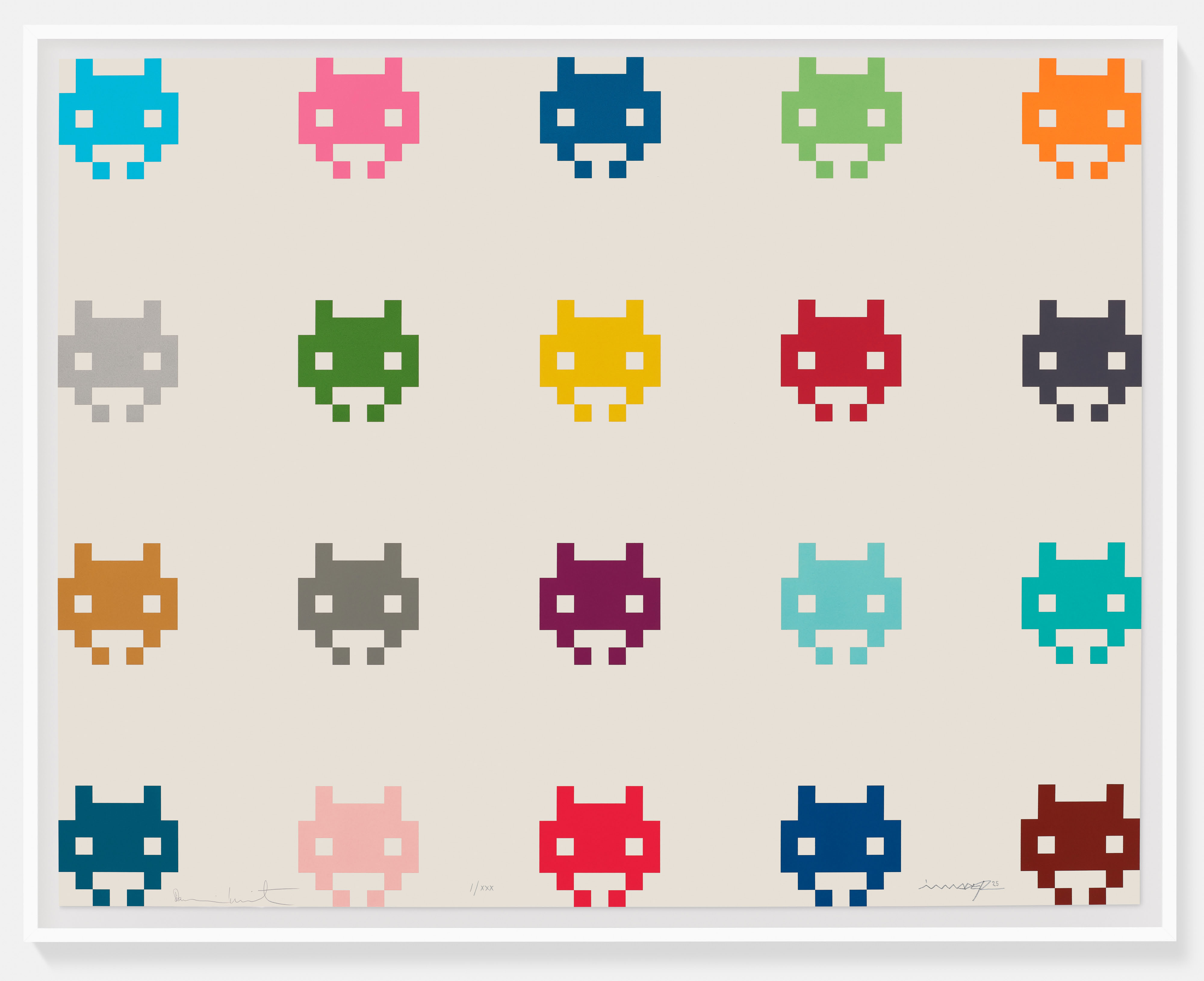
InvadHirst
InvadHirst is the framed 21-colour Hirst–Invader silkscreen, with a final edition of 1,194 and a closed 2025 purchase window.
Read the story ↗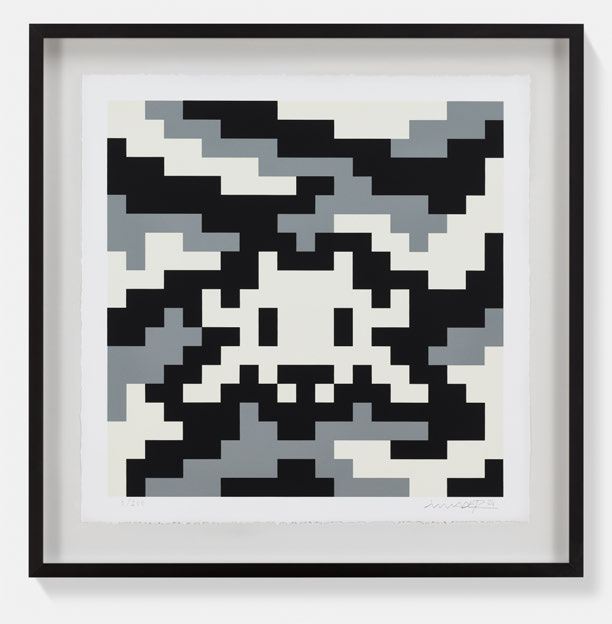
CAMO S-3C-M2
NVDR2-2 is the 51 cm framed glow-in-the-dark Camouflage screenprint, distinct from the glitter medium edition and earlier Rubik panel.
Read the story ↗Sources & verification
- www.space-invaders.com ↗official · checked Oct 6, 2026
- www.space-invaders.com ↗official · checked Oct 6, 2026
- heni.com ↗official · checked Oct 6, 2026
- shop.space-invaders.com ↗official · checked Oct 6, 2026
- heni.com ↗official · checked Oct 6, 2026
- Invader source-backed reference facts ↗official · checked Oct 7, 2026
- Invader portrait supplied in HENI Troubled Waters press kit ↗official · checked Oct 7, 2026
- Invader — Rubikcubism ↗official · checked Oct 7, 2026
- Invader — FlashInvaders ↗official · checked Oct 7, 2026