Topps format comparison: guarantees, checklists and odds
Compare exact Topps formats by pack count, guaranteed contents, exclusive parallels and manufacturer documents before choosing a box.
Start with the format and year
Match product year, league or property, product line, configuration and SKU. Hobby, Jumbo, Mega, Value and convention formats can share artwork while offering different contents. Use the exact format’s manufacturer checklist and odds sheet when available.
Read the guarantee literally
- Update Series Hobby promises an autograph or relic; Jumbo specifies an autograph and relic.
- Holiday Mega’s autograph, relic or Chrome base card allocation can be satisfied by the Chrome card.
- Holiday Hobby Tin Box is three tins; the 59-card and six-parallel counts apply per tin.
- Chrome x Jennie’s standard ten-card count can fall to three in a special-insert pack.
An instruction to look for autographs is not a box guarantee. A card preview or 1/1 image is a possible chase, not representative box contents. Preserve “on average” when the source qualifies an allocation that way.
Compare the cards you actually collect
For a player project, check the subject’s exact subset appearances and autograph eligibility. For a set project, account for inserts and duplicates rather than equating a box’s nominal card count with set completion. For parallel collecting, confirm the format carrying the desired exclusive.
Pack odds describe the stated population, not a sequence promising a hit every nth pack. Serial numbering is an edition count, not pack probability. Neither a checklist nor a guaranteed autograph establishes which player a buyer will receive.
Separate the buying milestones
Preorder opening, EQL entry, release day and dispatch are separate. A sold-out Topps preorder does not confirm that other dealers or release-day stock are exhausted. Compare current channel prices with their currency, configuration and shipping terms.
Worked examples: card codes and format columns
Start with the named section, then the card code and subject. One athlete can appear in base, inserts and autographs; those are separate cards. Conversely, several subject rows can describe one multi-person card. In the 2026 Cosmic WWE checklist, Star Clusters SC-2 repeats for Kevin Nash, Scott Hall and Hulk Hogan. Counting those as three distinct cards would inflate a set list. Keep the repeated code together when planning that collection.
The same discipline helps with variations. A base subject, a mini version and a Chrome version need separate labels. When cataloging a single card, include the year, set, card number, subset and finish or back variation. “The player’s Ginter card” is too broad once several physical versions exist.
The 2026 Allen & Ginter table provides a useful example: Rip Cards have a Hobby rate but dashes in the two retail columns; gold-bordered mini base cards reverse that direction. “Same set” therefore does not mean “same possible assortment.” Follow the exact row across the relevant column before comparing formats.
Sources & verification
- 2026 Cosmic Chrome Baseball Odds ↗official · checked Oct 4, 2026
- 2026 Allen & Ginter Odds ↗official · checked Oct 4, 2026
- 2026 Cosmic Chrome Baseball Checklist ↗official · checked Oct 4, 2026
- 2026 Topps Cosmic Chrome WWE official XLS checklist ↗official · checked Oct 4, 2026
- 2026 Topps Allen & Ginter Baseball Hobby Box ↗official · checked Oct 4, 2026
- Topps Support: Product Details ↗official · checked Oct 4, 2026
- Topps Project70 historical description ↗official · checked Oct 4, 2026
- Topps release calendar ↗official · checked Oct 4, 2026
- Topps checklists ↗official · checked Oct 4, 2026
- 2026 Bowman Chrome Baseball official release page ↗official · checked Oct 4, 2026
- Topps Cosmic Chrome Baseball Product History ↗official · checked Oct 4, 2026
- Topps Ripped: Brand History, Allen & Ginter Baseball ↗official · checked Oct 4, 2026
- Topps NOW official brand page ↗official · checked Oct 4, 2026
Topps
Explore the catalog
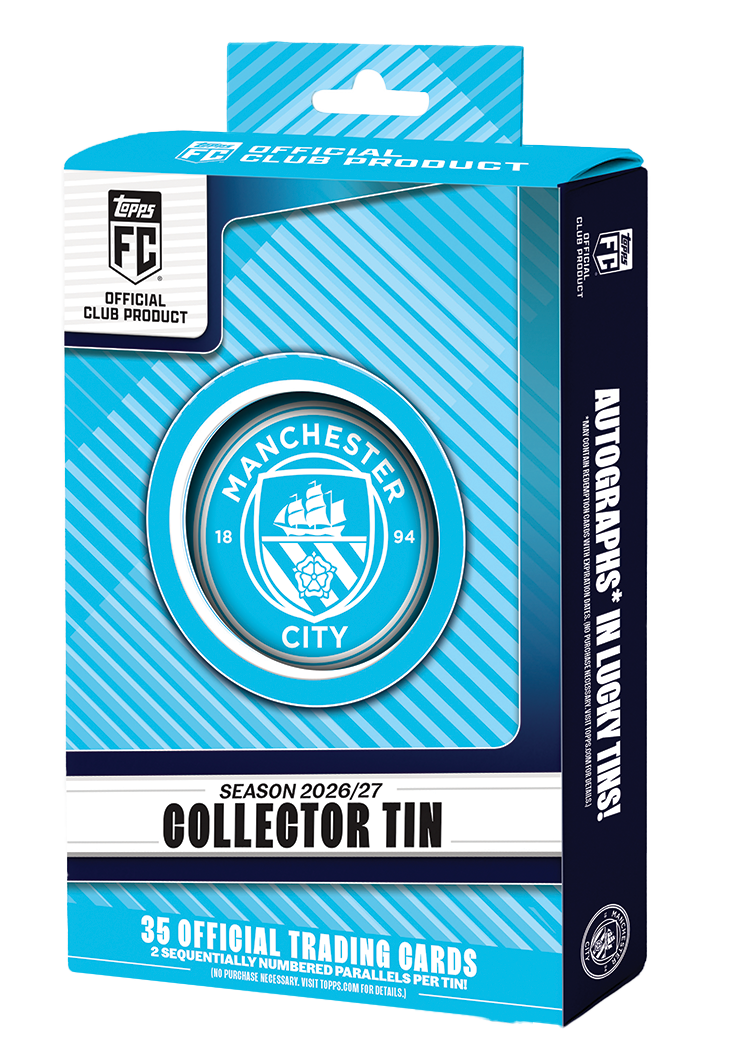
Topps Manchester City Collector Tin 2026/27: release and box details
Topps Manchester City Collector Tin 2026/27. 1 × 35 cards; Two serial-numbered parallels; autographs not guaranteed.
Read the story ↗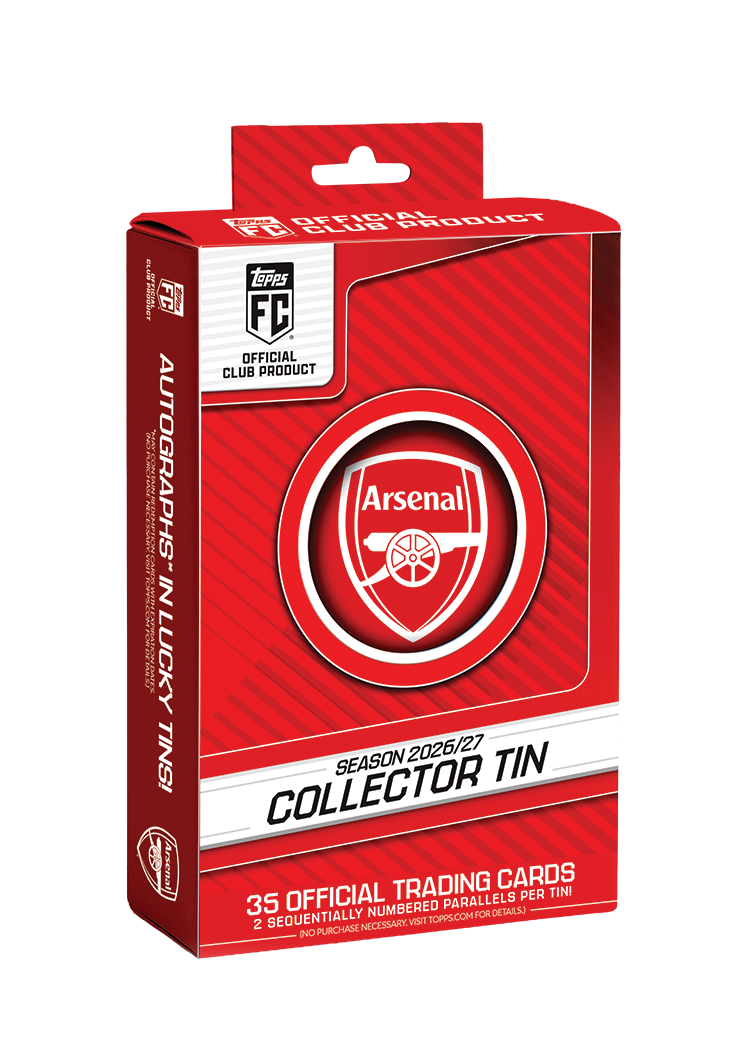
Topps Arsenal Collector Tin 2026/27: release and box details
Topps Arsenal Collector Tin 2026/27. Launch October 6, 2026. 1 × 35 cards; Two sequentially numbered parallels per tin; autographs only in lucky tins.
Read the story ↗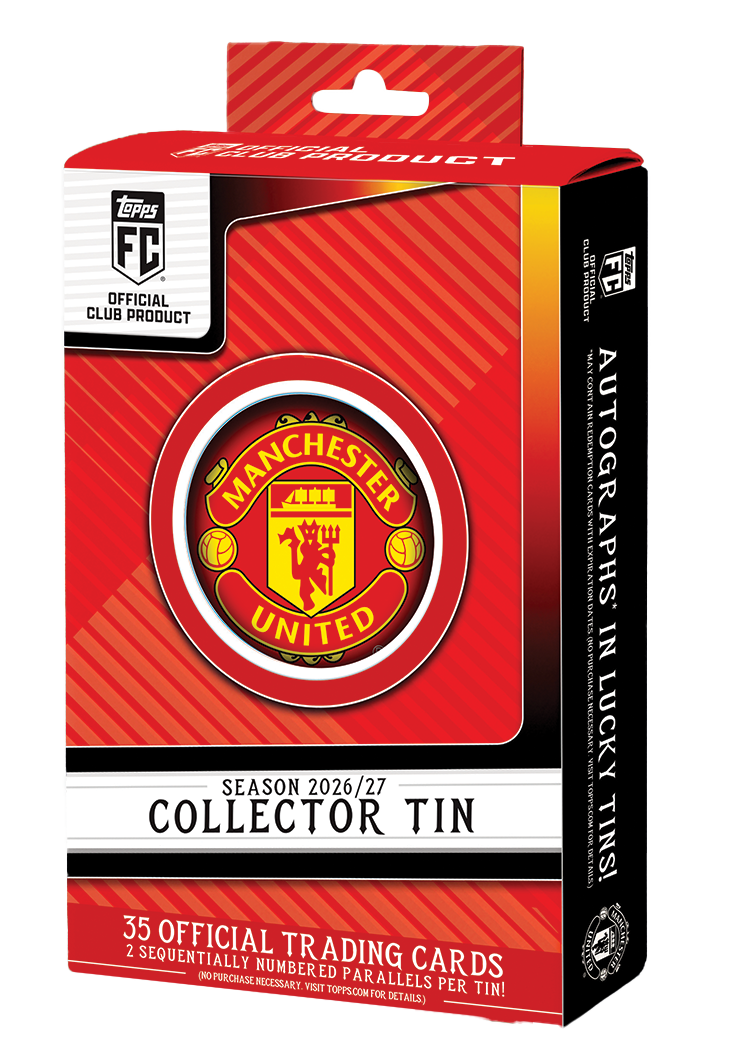
Topps Manchester United Collector Tin 2026/27: release and box details
Topps Manchester United Collector Tin 2026/27. 1 × 35 cards; Two serial-numbered parallels; autographs not guaranteed.
Read the story ↗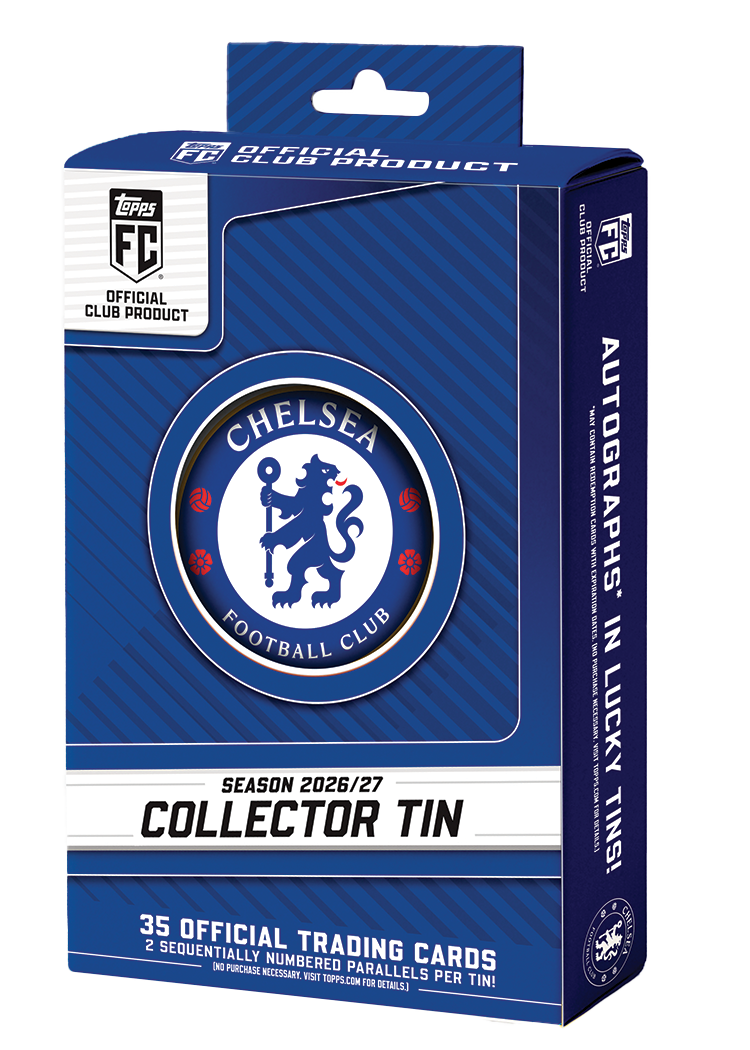
Topps Chelsea Collector Tin 2026/27: release and box details
Topps Chelsea Collector Tin 2026/27. 1 × 35 cards; Two serial-numbered parallels; autographs not guaranteed.
Read the story ↗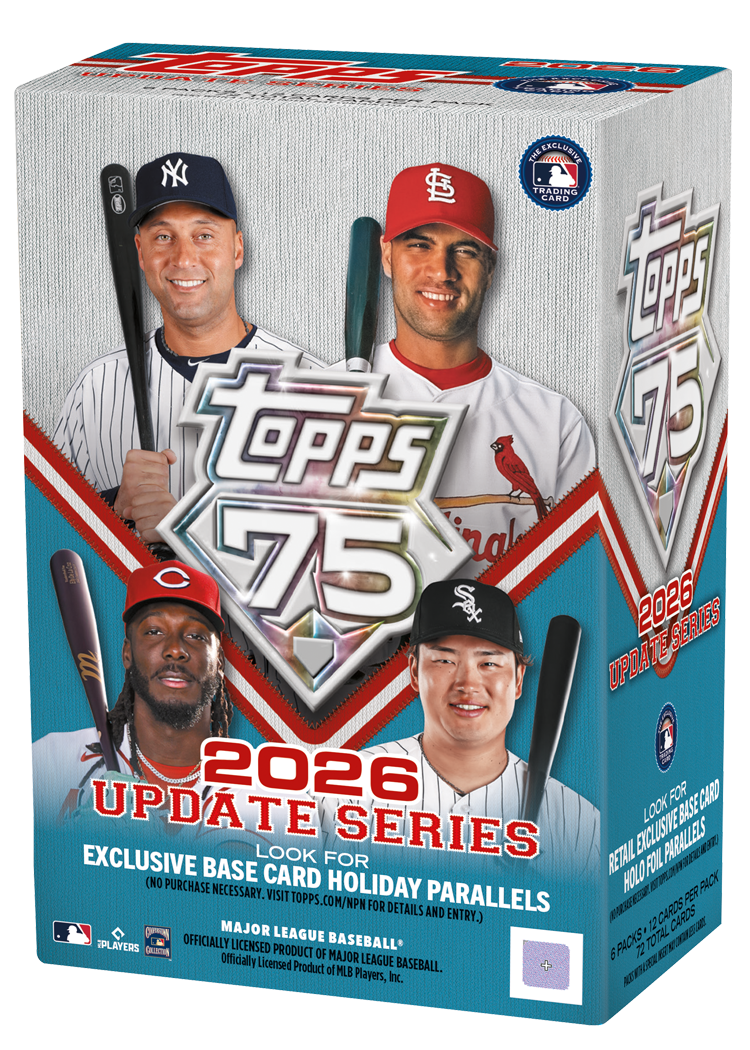
2026 Topps Update Series Baseball — Value Box: release and box details
2026 Topps Update Series Baseball — Value Box. Launch October 14, 2026. 6 × 12 cards; No autograph/relic guarantee stated.
Read the story ↗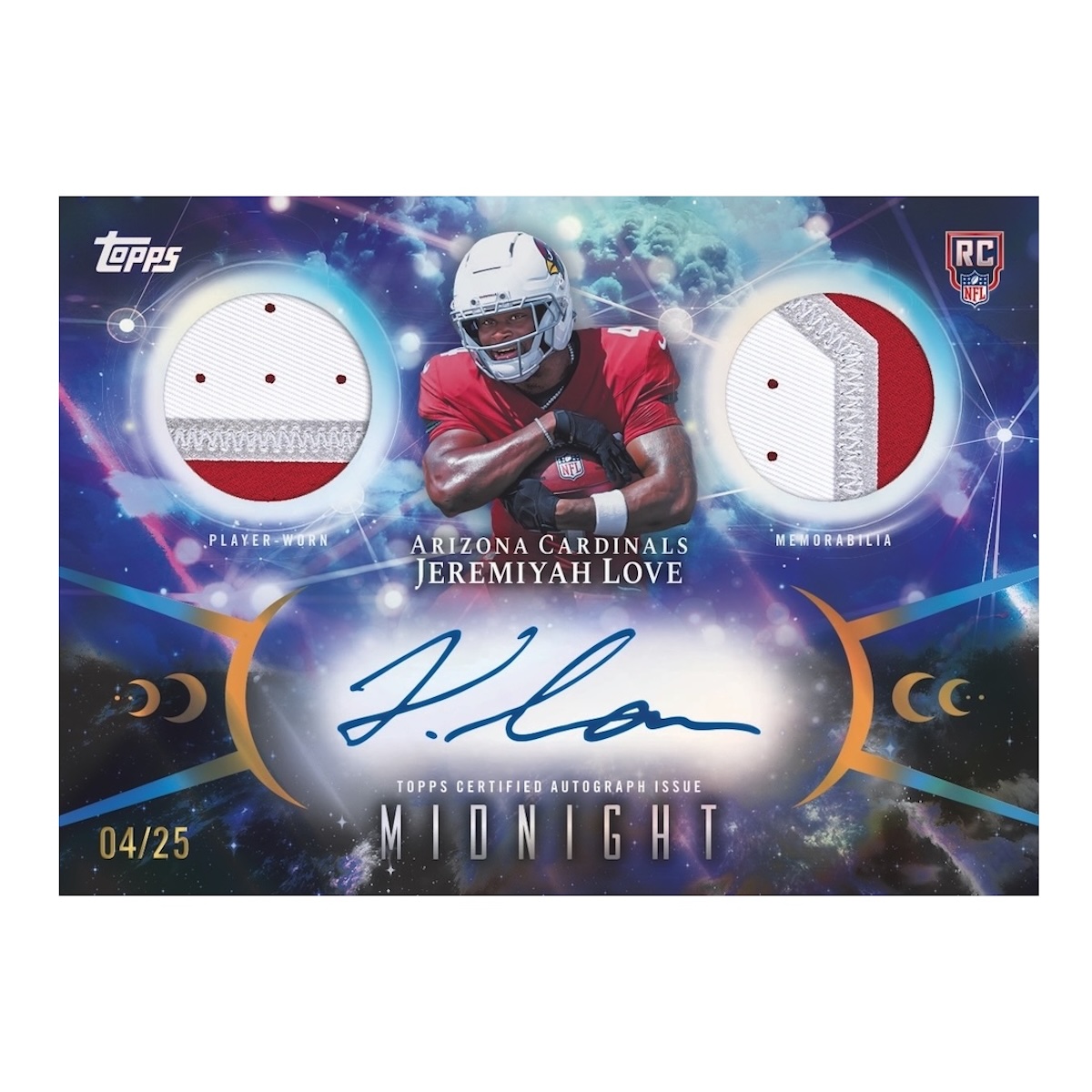
2026 Topps Midnight Football — Hobby Box: release and box details
2026 Topps Midnight Football — Hobby Box. Preorder October 12, 2026. 1 × 7 cards; Topps states three Chrome autographs per seven-card Hobby box.
Read the story ↗
2025-26 Topps Stadium Club Chrome UEFA Champions League — Hobby Box: release and box details
2025-26 Topps Stadium Club Chrome UEFA Champions League — Hobby Box. Preorder October 6, 2026. 20 × 6 cards; Checklist Insider reports one autograph per Hobby box.
Read the story ↗
2026 Topps X Street Fighter: release and box details
2026 Topps X Street Fighter. Preorder October 9, 2026. Configuration details pending.
Read the story ↗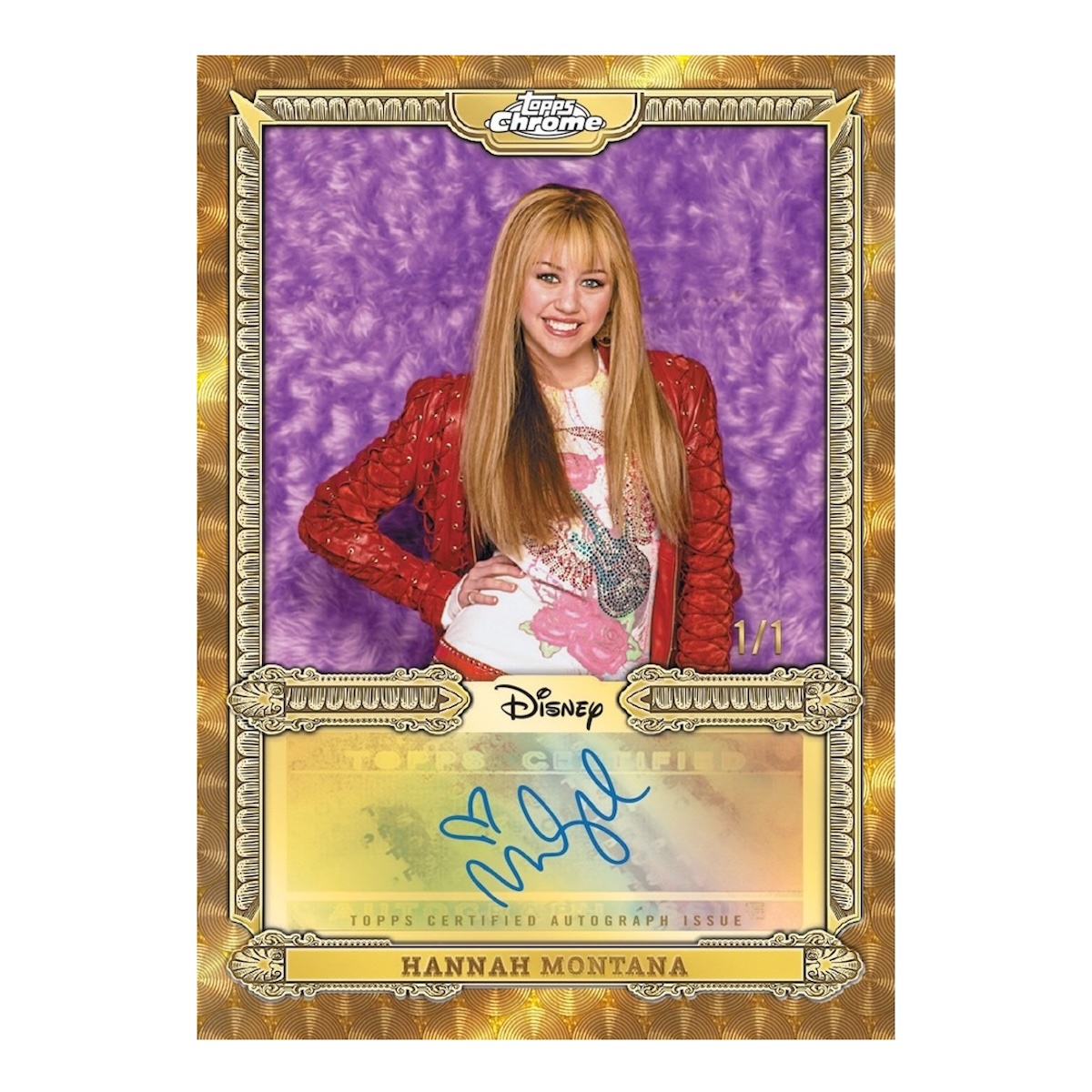
2026 Topps Mint Disney: release and box details
2026 Topps Mint Disney. Preorder October 13, 2026. Configuration details pending.
Read the story ↗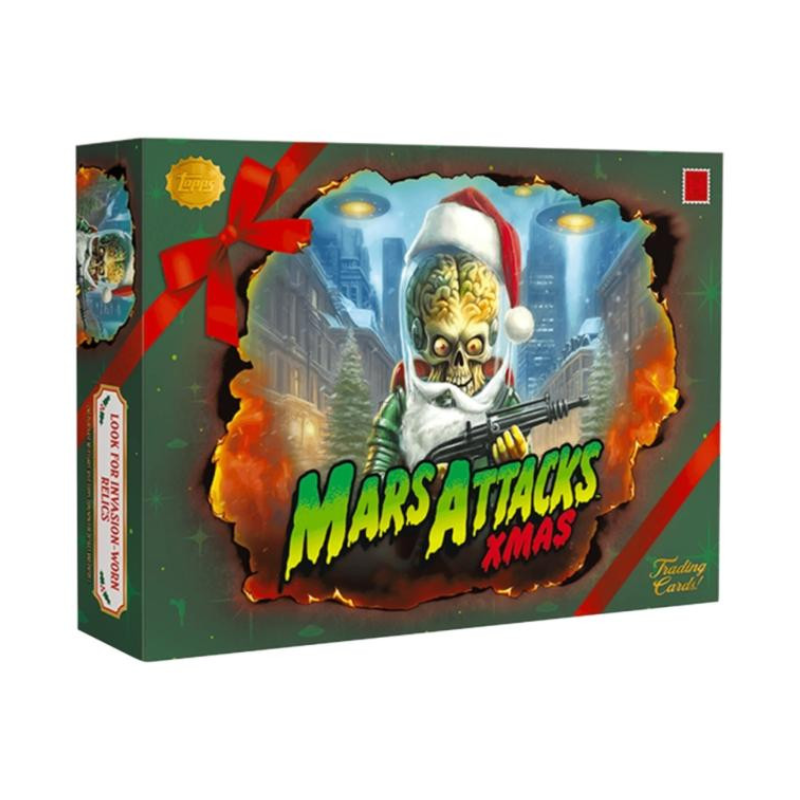
2026 Topps Mars Attacks Christmas — Hobby Box: release and box details
2026 Topps Mars Attacks Christmas — Hobby Box. Launch October 6, 2026. 10 × 5 cards; See format-specific contents and buying details.
Read the story ↗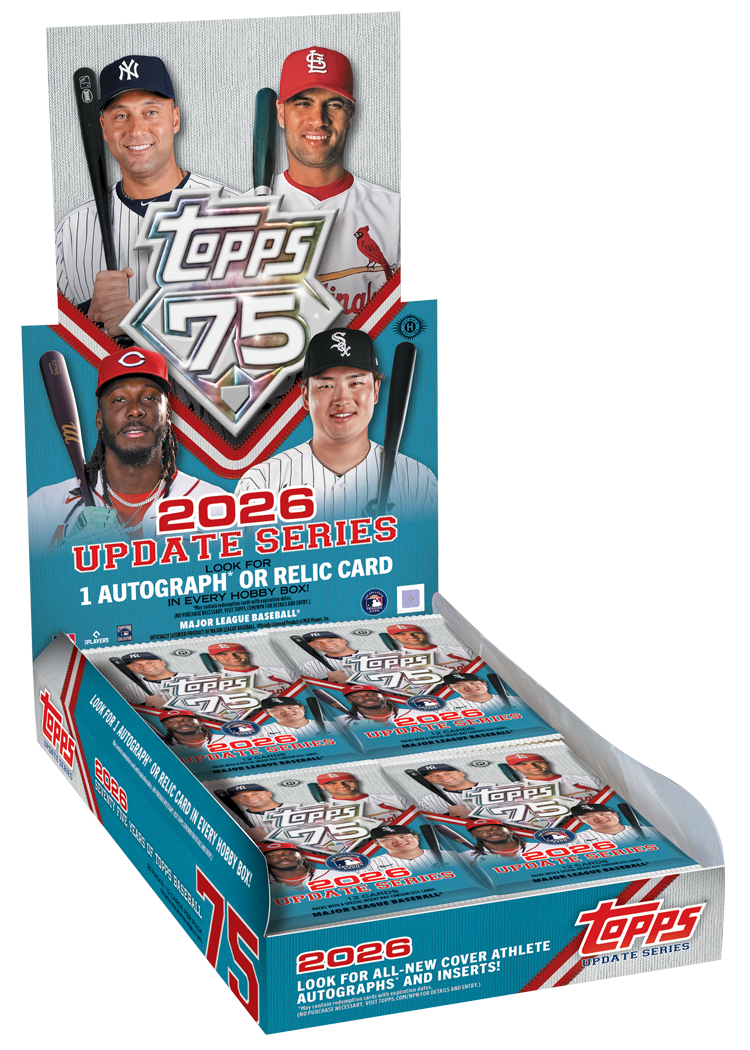
2026 Topps Update Series Baseball — Hobby Box: release and box details
2026 Topps Update Series Baseball — Hobby Box. Launch October 14, 2026. 20 × 12 cards; One autograph or relic.
Read the story ↗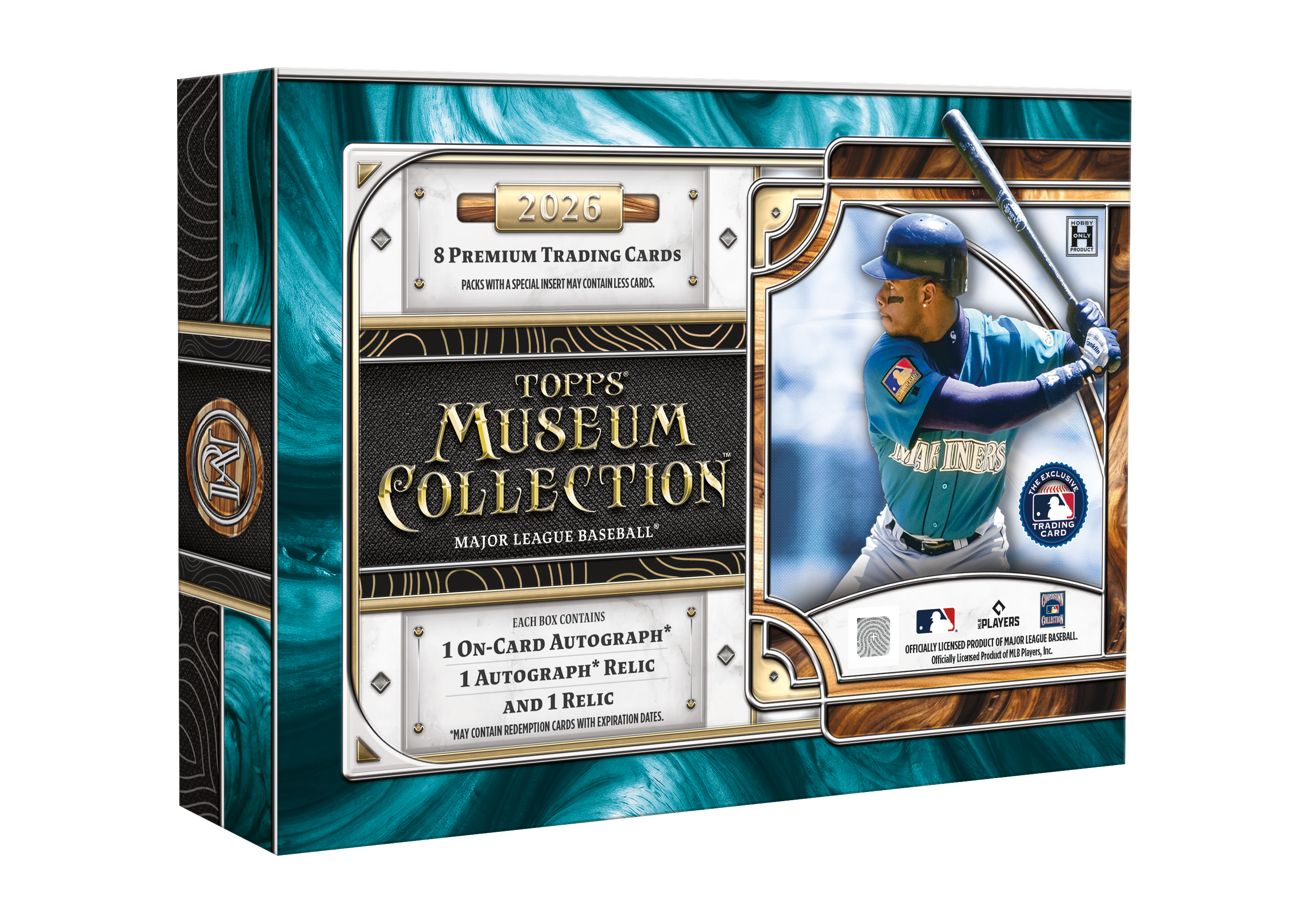
2026 Topps Museum Collection Baseball — Hobby Box: release and box details
2026 Topps Museum Collection Baseball — Hobby Box. Launch November 11, 2026. 1 × 8 cards; One on-card autograph, one autograph relic and one relic, per product packaging.
Read the story ↗