Mac Studio M5 Ultra: 512GB follows in late October
Mac Studio M5 Ultra starts at US $5,499; 512GB follows in late October with the higher-core chip. Exact 512GB date and configured price remain unannounced.
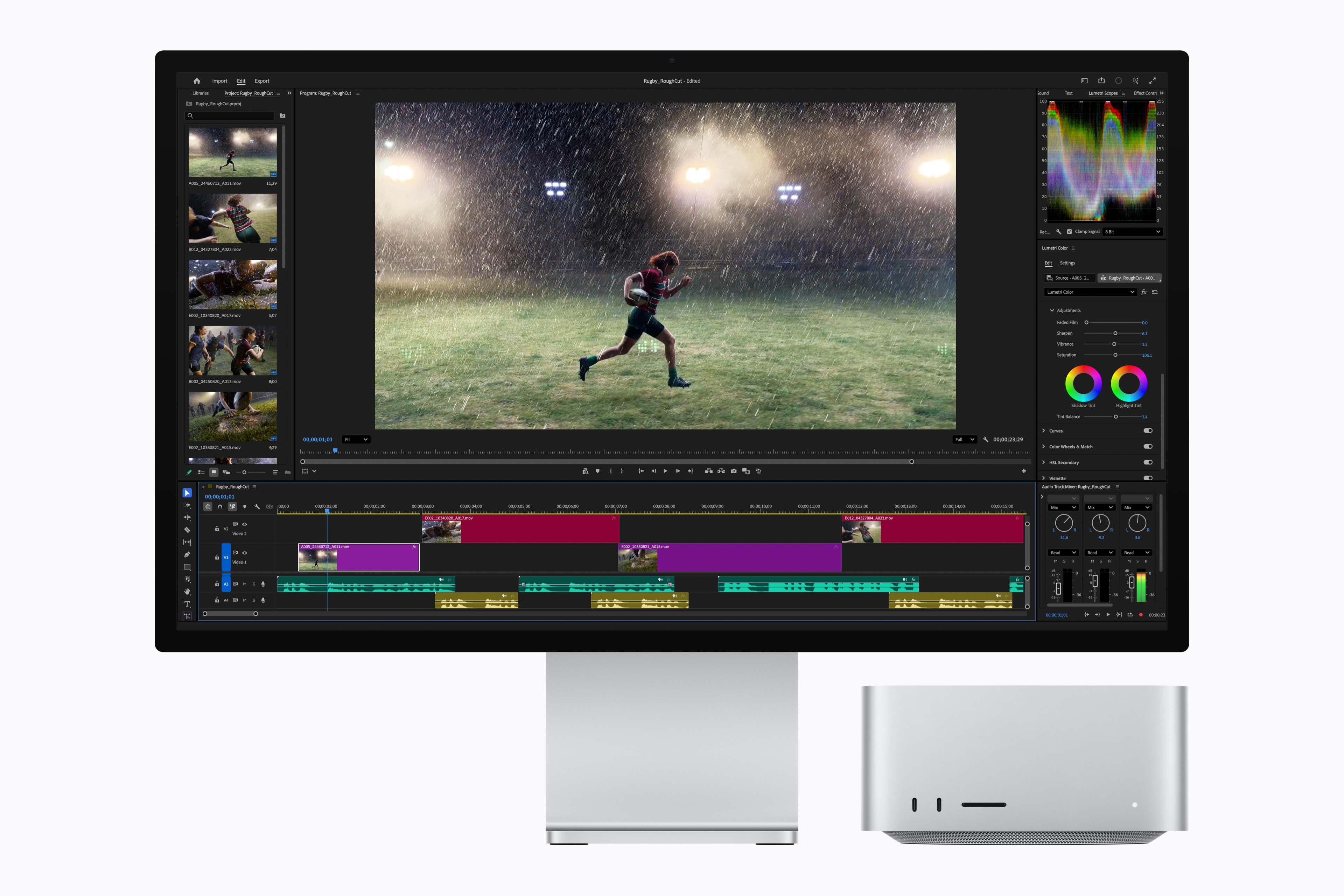
Mac Studio with M5 Ultra launched September 22, 2026, from US $5,499. The 512GB unified-memory configuration is scheduled for late October 2026, with no exact day or configured price announced. Apple’s Mac Studio configurator is the purchase route.
Configuration differences
M5 Ultra offers 30-core CPU / 64-core GPU and 36-core CPU / 80-core GPU options. Memory choices are 96GB, 256GB and 512GB; the 512GB option requires the higher-core chip. The $5,499 starting price does not price that configuration. Memory bandwidth rises to 1.2TB/s from M3 Ultra’s 819GB/s, while 512GB capacity itself is not new to Mac Studio. Match display-count and refresh-rate needs to the official port specifications before choosing a configuration.
Collector context
Mac Studio M5 Ultra’s late-October 512GB option is significant because it brings the new chip to a capacity already established by its predecessor. Apple’s March 2025 Mac Studio announcement offered M3 Ultra with up to 512GB. The September 2026 availability update separates the M5 Ultra launch from that later configuration. For an M3 Ultra owner, the upgrade story is therefore what happens inside the same broad memory envelope, rather than a newly doubled ceiling.
Compare the fullest chips and the distinction becomes clearer: M3 Ultra paired a 32-core CPU and 80-core GPU with 819GB/s of memory bandwidth; M5 Ultra reaches 36 CPU cores while retaining the 80-core GPU ceiling and lifting bandwidth to 1.2TB/s. That is about 47 percent more bandwidth, calculated from Apple’s 2025 and current specifications. The unchanged GPU count is a particularly useful warning against judging generations by core totals alone.
The architectural change includes Neural Accelerators in the Ultra GPU for the first time. In its M5 Ultra introduction, Apple reports up to four times faster LLM prompt processing in LM Studio than M3 Ultra, and up to 1.7 times faster Redshift rendering. Those task-specific claims point toward different beneficiaries: loading a long prompt and rendering a scene exercise different parts of a workstation. They should not be read as one speed multiplier applying to everything the machine does.
Original testing makes that distinction concrete. Tom’s Hardware tested the 36-core CPU/80-core GPU machine with 256GB memory and a 4TB SSD. It completed the review’s Handbrake transcode in 1 minute 4 seconds, eight seconds ahead of the Threadripper 9980X system, but trailed that processor and other tested workstations in Blender CPU rendering. The result gives a video team and a CPU-rendering team different evidence to weigh. It also describes a 256GB machine, not a measurement of the forthcoming 512GB version.
M5 Max remains the meaningful adjacent choice. Ultra adds more than the memory ceiling: its front USB-C sockets are Thunderbolt 5, whereas Max’s front ports run at USB 3 speed. Ultra also has twice the video decode, encode and ProRes engine counts in the configuration table. Those distinctions matter to a desk full of fast external devices or concurrent video work. Thunderbolt 5 itself is carried over from M3 Ultra, so it is a tier distinction here rather than an entirely new-generation feature.
The financial boundary is substantial: Apple’s 2026 launch pricing places entry M5 Ultra $3,000 above entry M5 Max. That buys a different starting configuration, not just a faster version of one otherwise identical computer. The delayed maximum-memory option matters most where capacity is the limiting factor; the independent workflow results explain why everyone else should compare the actual task before assigning value to the Ultra name.
Source: official product or release details.
In the details
- product family
- Mac Studio
- generation
- M5 Ultra (2026)
- model identifiers
- configurations
- 30-core CPU / 64-core GPU or 36-core CPU / 80-core GPU; 96GB, 256GB or 512GB unified memory. The 512GB option requires the 36-core CPU / 80-core GPU and is scheduled for late October 2026.
- key specs
- 1.2TB/s memory bandwidth; Thunderbolt 5, HDMI and 10Gb Ethernet; up to 512GB unified memory.
- compatibility
- macOS. Display count, resolution and refresh-rate combinations depend on the official configuration limits.
Release timeline
Preorder · US
today, August 25
Time unconfirmed · Apple US
From $5,499.00 USD
Checked Oct 4, 2026
Official preorder details ↗Launch · US
September 22
Time unconfirmed · Apple US
From $5,499.00 USD
Checked Oct 4, 2026
Official release details ↗Launch · US
late October
Time unconfirmed · Apple US
Price unconfirmed
Checked Oct 4, 2026
Official release details ↗
Sources & verification
- Mac Studio — Technical Specifications ↗official · checked Oct 4, 2026
- Buy Mac Studio ↗official · checked Oct 4, 2026
- The new Mac mini and Mac Studio are available today ↗official · checked Oct 4, 2026
- Apple introduces new Mac Studio with M5 Max and M5 Ultra ↗official · checked Oct 4, 2026
- Apple unveils new Mac Studio, the most powerful Mac ever ↗official · checked Oct 4, 2026
- Mac Studio (2025) — Tech Specs ↗official · checked Oct 4, 2026
- Apple Mac Studio (M5 Ultra) review: Local model citizen outpaces DGX Spark and Threadripper ↗independent reporting · checked Oct 4, 2026
- Apple reveals M3 Ultra, taking Apple silicon to a new extreme ↗official · checked Oct 4, 2026
- Apple Newsroom press asset and bundled LEGAL_NOTICE ↗official · checked Oct 4, 2026
- Manuals, Specs, and Downloads — Apple Support ↗official · checked Oct 4, 2026
- iPhone 18 Pro and iPhone 18 Pro Max ↗official · checked Oct 4, 2026
- Apple Watch Series 12 ↗official · checked Oct 4, 2026
- Mac Studio ↗official · checked Oct 4, 2026
- Apple unveils iPhone 17 Pro and iPhone 17 Pro Max ↗official · checked Oct 4, 2026
- iPhone 18 Pro and 18 Pro Max — Technical Specifications ↗official · checked Oct 4, 2026
- Introducing Apple Watch Series 12, with the all-new Health Sensing System ↗official · checked Oct 4, 2026
- Understand your readiness score on Apple Watch ↗official · checked Oct 4, 2026
- Apple unveils all-new Mac Studio and Studio Display ↗official · checked Oct 4, 2026
- Apple unveils M1 Ultra, the world’s most powerful chip for a personal computer ↗official · checked Oct 4, 2026
Apple
Related reading

iPhone 18 Pro
iPhone 18 Pro starts at US $1,199: 6.3-inch display, 256GB–2TB storage and variable-aperture camera. Compare configurations and the September 18 release.
Read the story ↗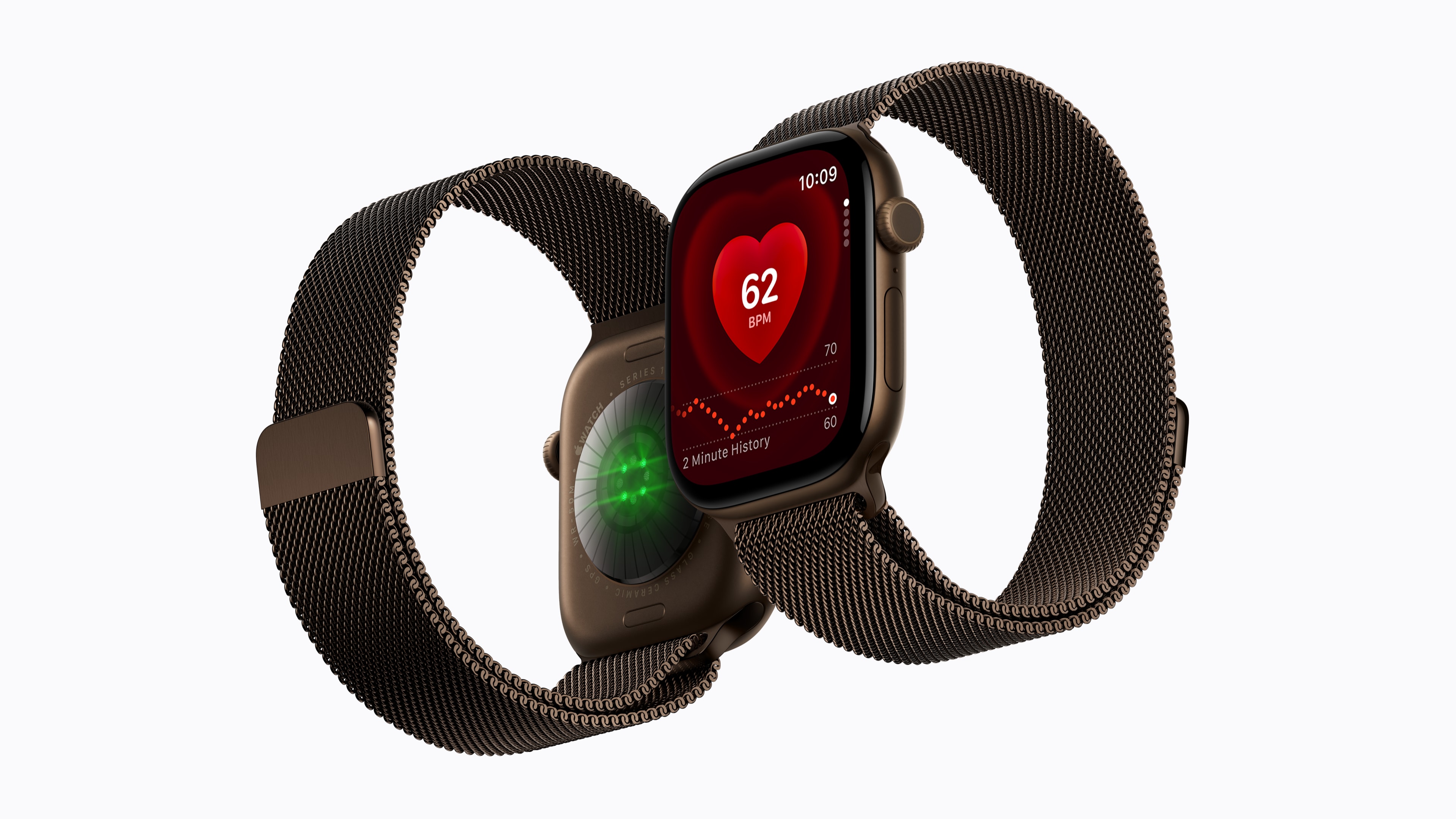
Apple Watch Series 12
Apple Watch Series 12 starts at US $399. Compare case choices, iPhone/iOS compatibility and the September 18 hardware launch versus later software.
Read the story ↗
AirPods 5
AirPods 5 cost US $129 or $149, with ANC on both. Compare charging cases, controls, rated battery life and compatibility after the September 18 launch.
Read the story ↗